2026-10-24 ·
Signs Of Chimney Damage After A Nor'easter In Berkeley Township
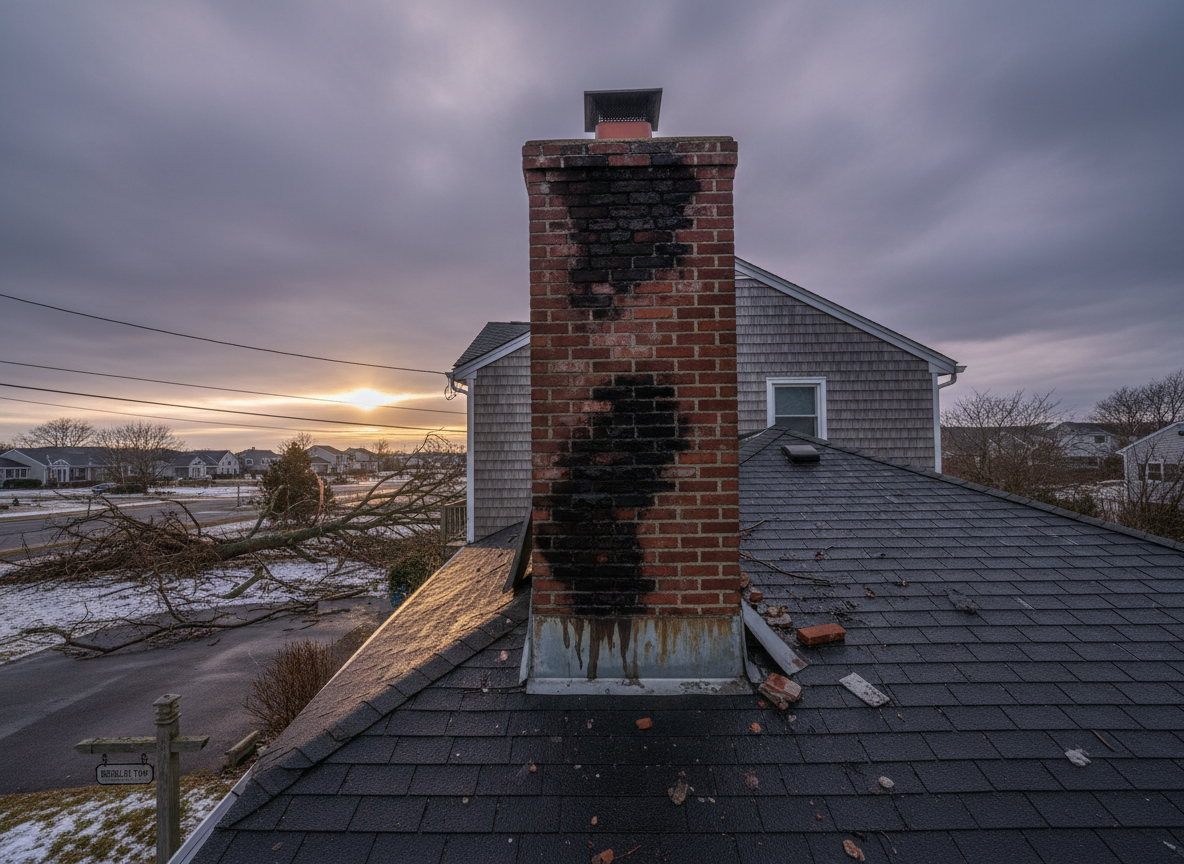
After a Nor'easter passes through Berkeley Township, homeowners often notice chimney issues within days as wind-driven rain and freeze-thaw cycles expose weaknesses in brick and mortar. The most common signs include new vertical cracks in the crown, spalling bricks on the flue, and water stains inside the attic where flashing has lifted. These problems appear faster on chimneys serving homes from the 1960s through 1980s that line neighborhoods around Pine Beach and Beachwood.
Exterior Masonry Changes
Walk the roofline after the storm passes and look for mortar joints that have eroded or turned white from salt residue carried by coastal winds. In Berkeley Township, many chimneys are single-wythe brick with no modern weep holes, so water sits against the flue liner and pushes bricks outward at the top three courses. Loose or missing bricks near the roof deck usually trace back to 40-60 mph gusts that torqued the structure during the event. Check the south and east faces first because those sides take the brunt of a typical Nor'easter track up the Jersey coast.
Crown and Flashing Failures
The chimney crown is the first surface to collect standing water when rain falls at an angle. After a Nor'easter, hairline cracks radiating from the flue opening often widen within a week as trapped moisture expands. Flashing around the base may have pulled away from the shingles, especially on homes in the Claremont and Elmwood sections where roof pitches are moderate and wind uplift is common. If you see dark streaks running down the exterior brick below the flashing line, water has already bypassed the seal and is traveling into the attic space.
Interior Water and Draft Issues
Inside the home, check the fireplace throat and damper area for damp soot or white efflorescence on the firebox walls. Nor'easter moisture that enters through a damaged crown can travel down the flue and collect on the smoke shelf, creating a musty smell that lingers for weeks. In Berkeley Township homes with metal liners installed 15-25 years ago, the liner seams can separate under wind pressure, allowing water to drip onto the damper and rust the mechanism. Reduced draft after the storm often signals partial blockage from fallen debris or shifted creosote loosened by vibration.
Schedule a chimney inspection service as soon as you notice any of these indicators. Early detection prevents water from reaching the ceiling joists and causing larger structural repairs later in the season.
When to Schedule Professional Assessment
If cracks exceed 1/8 inch wide, multiple bricks feel loose when pressed, or water stains appear on interior walls within 10 feet of the chimney, contact a technician the same day. Berkeley Township experiences repeated Nor'easters between November and March, so waiting allows additional cycles of freeze-thaw damage. A thorough check of the crown, flashing and liner can usually be completed in one visit even on two-story homes common throughout the township.
Homeowners in Berkeley Hills and surrounding Ocean County neighborhoods often compare notes with neighbors after these storms because damage patterns repeat on similar-era construction. Reading Step-By-Step Chimney Crown Inspection For Older Homes In Berkeley gives a clear checklist before the next system arrives. For immediate post-storm evaluation, chimney repair near me searches connect residents with crews familiar with local wind loads and masonry types. Addressing issues promptly keeps small repairs from turning into full chimney restoration projects after multiple storms.